A foot neuroma, specifically Morton’s neuroma, is a painful condition characterized by the thickening of the tissue around one of the nerves leading to your toes. It often feels like you are standing on a pebble or a fold in your sock, typically occurring between the third and fourth toes.
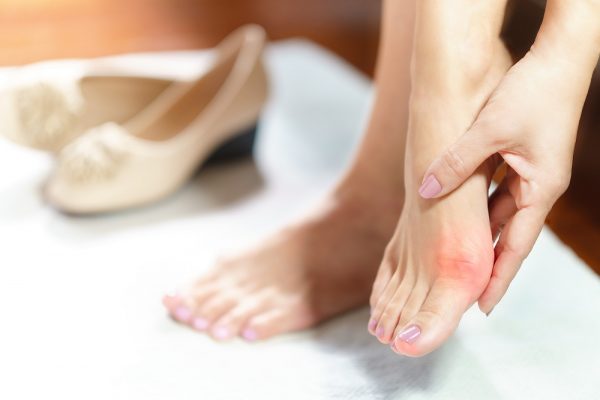
If you are an active resident leaving footprints all over Southwest Florida, staying mobile isn’t just a hobby — it’s a lifestyle. Whether you are spending five days a week on the pickleball court or enjoying long walks along the Gulf, ball-of-foot pain can feel like an unwelcome sideline.
While the term “neuroma” may sound complex, it is actually a benign nerve swelling caused by compression or irritation. Think of it as your foot’s way of signaling that a nerve is under too much pressure.
Recognizing Neuroma Symptoms Early
Early signs of a neuroma include sharp, burning pain in the ball of the foot or tingling and numbness in the toes.
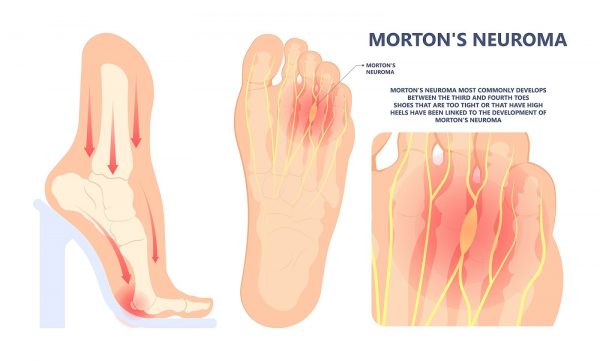
For those who value modern technology and efficient relief to get back to their active routines, recognizing these specific warning signs is the first step toward recovery:
- The “Pebble in Your Shoe” Sensation: You might feel as though there is a stone or a bunched-up sock under the ball of your foot, even when your shoes are empty.
- Burning or Sharp Pain: You may experience a sharp, stinging pain in the ball of your foot that often radiates into your toes.
- Tingling and Numbness: It is common to feel “pins and needles” or a total loss of sensation in the affected toes.
- Relief When Barefoot: You might find that your pain significantly decreases when you remove your shoes and massage the area.
Common Causes of Foot Pain
While neuromas are a leading cause of nerve pain, other conditions can mimic these symptoms, making an expert diagnosis essential.
Because you need relief fast, it is important to distinguish a neuroma from other common foot issues:
1. Plantar Fasciitis (Heel Pain)
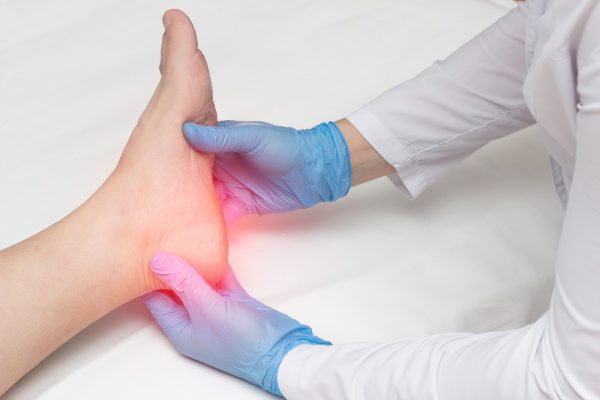
If your pain is sharpest in the morning and centered in the heel or arch, it is likely plantar fasciitis — an inflammation of the thick tissue along the bottom of your foot. This is one of the most common causes of foot pain.
2. Stress Fractures
These tiny cracks in the bone result from repetitive impact, such as pivoting on a hard court. Because the dull ache of a stress fracture can feel similar to nerve irritation, it is often easy to misidentify without professional help.
3. Bunions and Structural Shifts
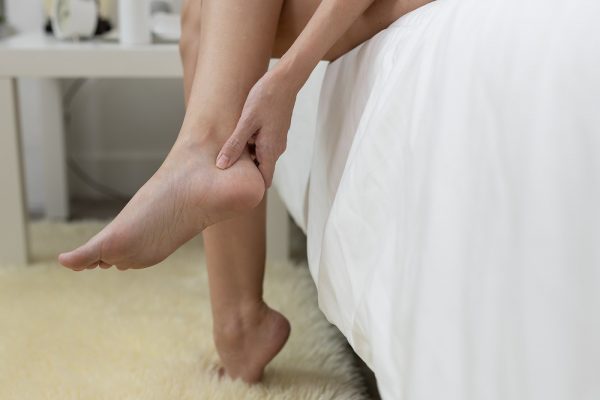
A bunion occurs when the big toe joint shifts out of alignment, creating a bony bump. This structural change can increase pressure across the rest of your foot, sometimes irritating the nerves and leading to neuroma symptoms.
Non-Surgical Relief for Your Active Lifestyle
Most neuromas can be successfully managed without surgery through customized orthotics, footwear changes, and advanced non-invasive treatments.

You shouldn’t have to choose between foot health and the activities you love. We prioritize efficient, practical solutions to get you back on your feet:
- Custom Orthotics: Specialized inserts can help lift and separate the metatarsal bones, taking the direct “pinch” off the nerve.
- Footwear Adjustments: Switching to shoes with a wider toe box allows your toes to spread, reducing the compression that triggers nerve swelling.
- Professional Assessment: A specialist can provide advanced treatments that promote faster healing than home remedies alone.
When to See a Southwest Florida Podiatrist
If your foot pain lasts longer than two weeks or feels like an electric shock, it is time for a professional evaluation to prevent permanent nerve damage. Persistent pain is a sign that your body needs more than just rest.
At The Foot & Ankle Group, our experienced specialists provide comprehensive care across Fort Myers, Bonita Springs, and Cape Coral. We combine medical expertise with genuine care to ensure your recovery is as fast as possible.
Ready for relief? Learn more about neuroma treatment — including how you can get instant answers with our in-house MRI — or explore our blog for more information about the ins and outs of feet and ankles.
Categorized in: Blog
Comments are closed