Don’t let foot warts grow on you—literally. If you’ve noticed a rough patch, a tender spot, or a small hard bump on the sole of your foot, it’s easy to dismiss it as a blister or dry skin. But in Southwest Florida, where residents are barefoot on pool decks, beach walkways, yoga mats, and nail salon floors year-round, that little spot deserves a second look.
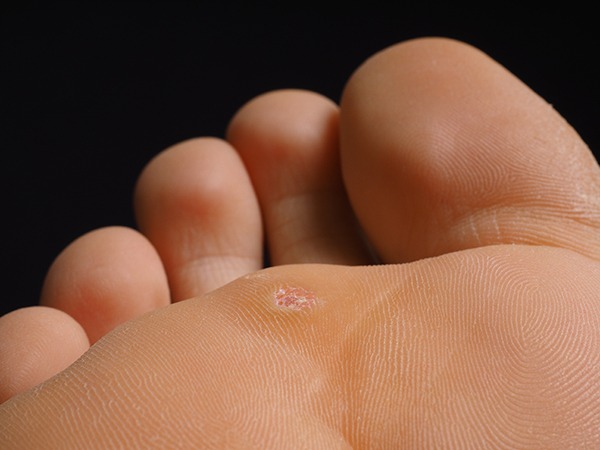
Those rough foot lesions may not be a simple skin issue. They could be plantar warts—and catching them early is the most effective way to stop them from spreading.
What Exactly Is a Plantar Wart?
Plantar warts—medically known as verruca plantaris—are hard, fleshy bumps that form on the bottom pads, sides, or between the toes of the foot. They are caused by the human papillomavirus (HPV), which enters the skin through small cuts or scrapes and triggers abnormal skin cell growth.
Early plantar wart signs to watch for include:
- Rough or grainy skin texture on the sole of the foot
- A small hard spot that appeared without obvious cause
- Walking pain or tenderness on the ball or heel of the foot
- Tiny dark specks—sometimes called wart seeds—which are small clotted blood vessels. Note: these do not always appear on very early warts, so their absence does not rule out a wart.
If any of these plantar wart signs sound familiar, professional evaluation is the fastest way to know for certain.
Warts vs. Calluses: How to Tell the Difference
Plantar warts are frequently mistaken for calluses—and for good reason. Both involve thickened, hardened skin. Calluses are flat, dry, yellowish patches caused by repeated friction or pressure. A wart growing within a callus, however, tends to grow inward rather than outward, making it harder to spot from the surface.
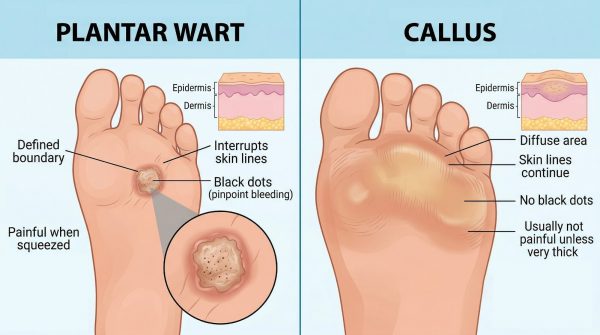
The key differentiator: look for black pinpoints (wart seeds) within the rough skin. Calluses will not have them. Not sure which you’re dealing with? Our post on the difference between foot corns and calluses breaks down the distinction in detail.
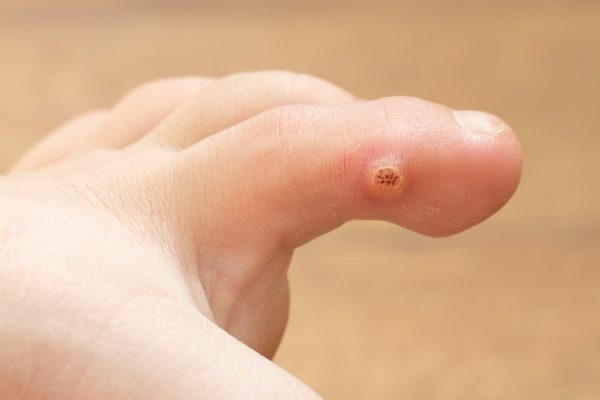
Wart Contagion: How Do Plantar Warts Spread?
The HPV foot virus thrives in warm, damp environments. In SWFL, that means the very places locals and snowbirds enjoy most: community pools, public showers, yoga studios, and nail salons. The virus enters the skin through small cuts or scrapes—exposure can happen without you realizing it.
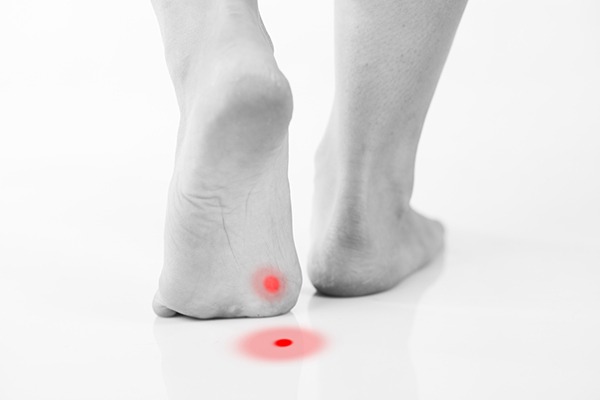
Factors that increase risk include:
- Walking barefoot in communal spaces
- A weakened or compromised immune system
- Visiting nail salons that do not follow proper sanitation standards
Our podiatrists have written practical guidance on the risks of going barefoot and how to protect yourself from pedicure infections—both worth a read if you frequent these spaces.
For individuals managing diabetes or circulation concerns, any new lesion on the foot warrants prompt professional evaluation. Routine foot monitoring is an essential part of long-term care, and our team treats each visit with the thoroughness it requires.
Don’t Let a Small Spot Become a Bigger Problem
Plantar warts do not resolve on their own the way many people hope. A single wart can expand into a cluster—known as mosaic warts—if left untreated. Because they closely mimic corns, blisters, and areas of rough foot skin, self-diagnosis is unreliable. Professional confirmation is the only dependable path forward.
If something on your foot does not look or feel right, the most important step is getting a clear answer.
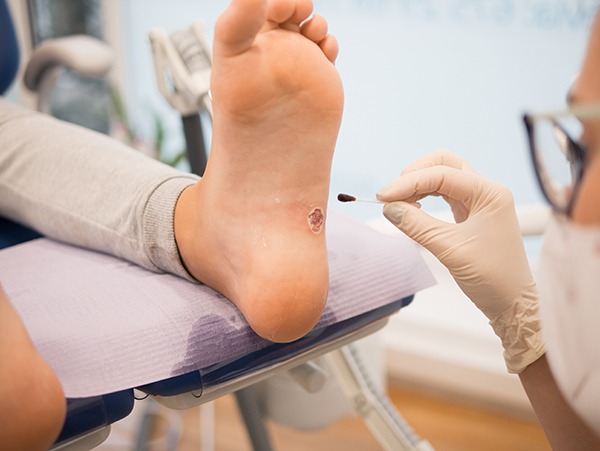
At The Foot & Ankle Group, we assess each case individually—because the right treatment depends on the size, location, and how long the wart has been present. For many of our neighbors, Swift Microwave Therapy is the preferred path forward: no open wounds, no lengthy recovery, and clinically proven results. Our podiatrists will walk you through every option so you leave with a clear plan, not just a diagnosis.Ready to get a definitive answer? Explore our plantar wart treatments and schedule your appointment at our Fort Myers, Bonita Springs, or Cape Coral office today.
Categorized in: Blog
Comments are closed