You’re in the middle of a solid game—your serve is on, your partner is dialed in—and there it is again. That sharp, nagging sensation on the bottom of your foot. You shake it off, switch sides, and try to forget about it. But it’s not going away. And you’re starting to suspect it never will on its own.
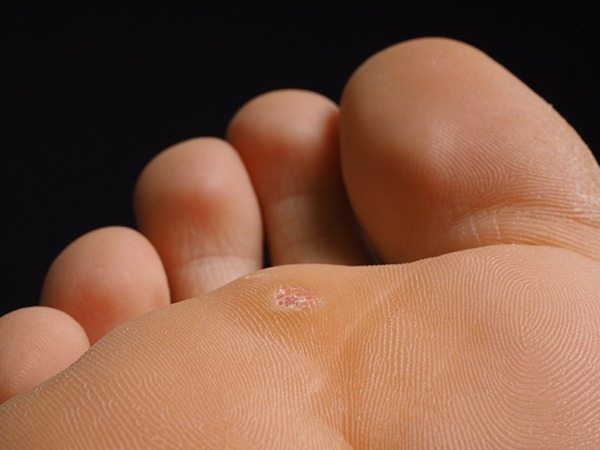
If you’ve already tried the drugstore patches, the freeze spray, maybe even the duct tape trick you read about online—and that rough, painful spot on your foot is still there—it’s time to talk about what actually works. Not sure if what you’re dealing with is a plantar wart? Get a confirmed diagnosis before you go any further.
For those who already know: here’s your path to real relief.
Why Over-the-Counter Treatments Often Fall Short
Here’s the problem with most drugstore wart treatments: they work on the surface. Salicylic acid pads and OTC freeze sprays are marketed as foot skin treatments, but plantar warts aren’t a skin problem. They’re a viral infection caused by the human papillomavirus (HPV), and the virus lives in the deeper layers of tissue where topical treatments simply can’t reach.
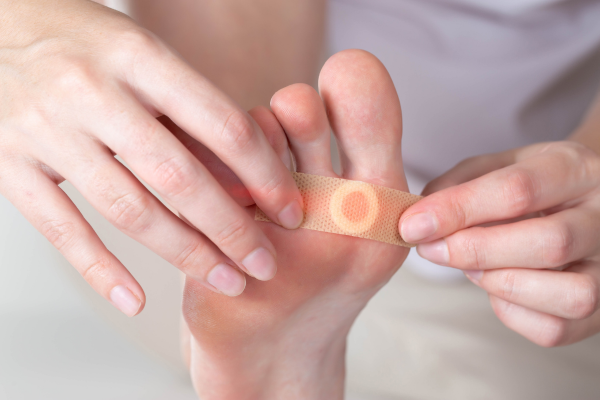
The result? Weeks of effort, temporary improvement, and then the wart comes back—sometimes larger, sometimes in more places. That rough foot skin that won’t smooth out, the walking pain that flares every time you’re active—those aren’t signs the treatment is working. Repeated at-home attempts can also irritate the surrounding skin and delay real relief. If you want the full picture on what home wart removal can and can’t do, we’ve got that covered—but if you’re ready to move on, here’s what professional foot wart treatment actually looks like.
The numbers tell the full story:
| OTC Salicylic Acid | Professional Cryotherapy | Swift Microwave Therapy | |
| Penetrates to root virus | No | Partial | Yes |
| Clinical resolution rate | 13.6% | 45.6% | 83.3% |
| Typical treatments needed | Weeks of daily use | Multiple sessions | 2–4 sessions |
| Downtime | None | Blistering possible | None |
Resolution rates sourced from Hagon et al., 2023, Journal of Foot and Ankle Research (PMC10268531).
The gap between doing it yourself and getting it done right is significant. For anyone who needs to stay active and on their feet—professional treatment isn’t just more effective. It’s faster.
Our Approach to Plantar Wart Treatment
At The Foot & Ankle Group, we don’t reach for the same tool every time. Think of us as your Swiss Army knife for foot care: we evaluate what you have, how long you’ve had it, how many warts are involved, and your overall health profile—then we select the treatment that gives you the best shot at full resolution with the least disruption to your life.
Here’s what’s in our toolkit.
Prescription-Strength Topical Treatments
Clinical-grade salicylic acid is significantly more concentrated than anything available over the counter. Applied precisely in-office, it targets wart tissue without damaging the healthy skin around it. For early-stage or less stubborn warts, this can be an efficient first line of treatment.
Professional Cryotherapy
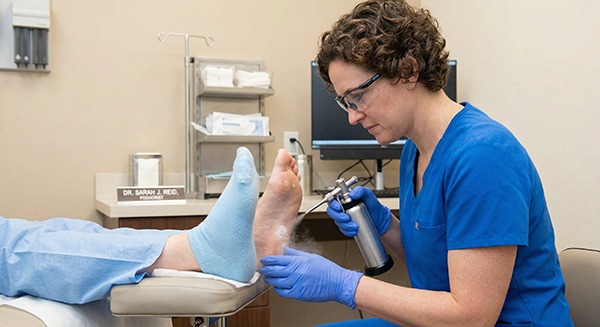
The liquid nitrogen a podiatrist uses gets far colder than any OTC spray—and it penetrates deeper, targeting the infected tissue directly. The result is a more controlled, more effective freeze that OTC products simply can’t replicate. In most cases, treatment begins at your first visit.
Swift Microwave Therapy
This is our featured option for active patients who need results without downtime.
Swift Microwave Therapy works differently from every other treatment on this list. Instead of attacking the wart from the outside, Swift delivers a precise dose of microwave energy directly into the infected tissue, raising its temperature to a therapeutic range. This damages the HPV-infected cells and—critically—triggers the body’s own immune system to recognize and clear the virus.
The protocol is straightforward: three to four sessions, spaced four weeks apart, each lasting just minutes. No breaking of the skin. No bandages. No recovery period. You walk in, you get treated, and you walk out.
The clinical evidence backs it up. A peer-reviewed retrospective study published in the Journal of Foot and Ankle Research (Hagon et al., 2023; PMC10268531) followed 150 plantar warts across 45 patients treated with Swift. The resolution rate was 83.3%, averaging just 2.8 treatment sessions.
Critically, 73% of those patients had already tried and failed with previous treatments—including salicylic acid and cryotherapy—before turning to Swift for wart removal. If that sounds like your situation, Swift may be exactly what you’ve been looking for: cutting-edge, non-surgical, and you’re back to doing what you love the same day.
Surgical Excision
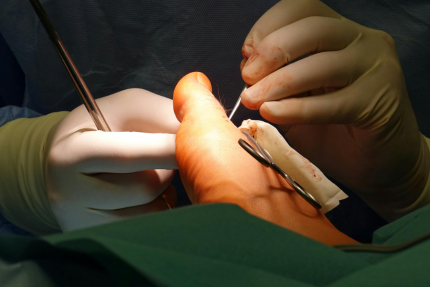
For the most persistent, treatment-resistant cases, a minor in-office surgical excision can remove the wart entirely. This is always a last resort—we exhaust every conservative option first. If it comes to this, it’s quick, it’s done right in the office, and it ends the cycle for good.
Who Should See a Podiatrist Sooner Rather Than Later
Every day you wait is another day the virus spreads. Plantar warts are caused by HPV, and while the strain responsible for foot warts isn’t highly contagious, the virus does shed from the wart into your environment—your shower floor, your pool deck, your locker room. A family member or teammate walking barefoot in those same spaces is at risk.
The longer you wait, the more the viral load builds, and the more complex treatment can become. This is not the kind of thing that rewards patience.
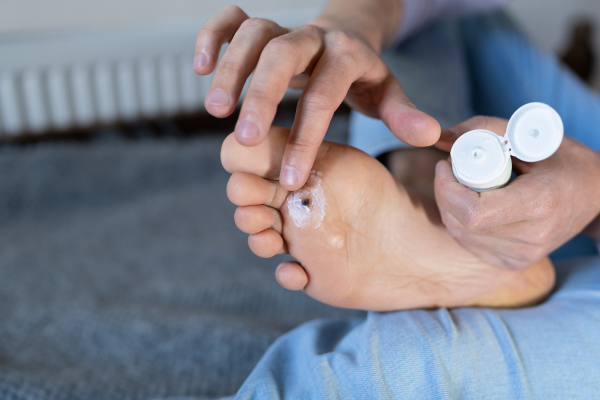
There’s also a diagnostic reason to see a professional sooner rather than later. What looks like a plantar wart can turn out to be a corn, a plantar fibroma, or another condition entirely. Treating the wrong thing with the wrong remedy wastes time and can make the underlying issue worse. A podiatrist confirms the diagnosis before a single treatment begins.
If you are managing diabetes or a compromised immune system: do not attempt home treatment. Reduced circulation and diminished nerve sensitivity in the feet make any foot wound—even a small one—a serious health concern. See a specialist at the first sign of any growth or sore on your foot. This is not optional.
What to Expect at Your First Appointment
We know your time matters. Here’s what happens when you come in.
Your podiatrist will examine the wart and confirm the diagnosis—ruling out other conditions before any treatment begins. In most cases, treatment starts at that same first visit. The process is efficient: no lengthy procedures, no complicated aftercare instructions, no prolonged recovery.
We’ll also talk wart prevention. Plantar warts can recur if the underlying exposure risk isn’t addressed. That means wearing shower shoes in community spaces, keeping feet dry after activity, and doing a quick visual check of your feet after time at the pool or gym. Small habits. Big difference.
Stop Waiting—Get It Handled
Our team at The Foot & Ankle Group has helped people across Fort Myers, Bonita Springs, and Cape Coral find fast, lasting relief from plantar warts—whether that means a round of Swift Microwave Therapy or a straightforward in-office procedure. We combine expert podiatric care with the kind of efficiency that gets you in, treated, and back to your life.
Ready to stop guessing and start healing? Select the location closest to you. Your feet will thank you—and so will your pickleball game.
Categorized in: Blog
Comments are closed