It’s a frustrating nightly ritual for many: sitting on the edge of the tub, armed with a pumice stone, trying to file away a stubborn, painful patch of skin. You might have swapped your footwear for “comfort” brands or tried every gel cushion at the drugstore, yet the discomfort returns with a vengeance after just a few days of normal activity.
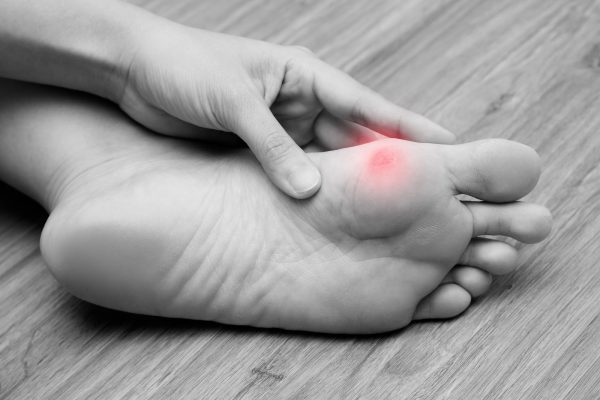
If you feel like you’re losing the battle against your own skin, it’s because you are likely treating a mechanical problem with a cosmetic solution. To stop the cycle, we need to look beneath the surface at why the body builds these “shields” in the first place.
Myth vs. Reality: What is a Corn?
Most people assume a corn is just “extra skin” caused by a shoe that’s too tight. While shoes play a role, the anatomy of a corn is more complex:
- The Reality: A corn is a concentrated “plug” of keratinized skin. It forms a cone shape that points inward. When you walk, your body weight presses that cone into the sensitive nerves of your toe, creating that “walking on a stone” sensation.
- The Comparison: Unlike a callus, which is a broad, flat patch of protection usually found on the ball or heel of the foot, a corn is a localized strike point.
While a callus acts like a broad shield for your foot, a corn acts more like a pinpoint. Because the pressure is concentrated on such a small, deep area, simply filing away the surface rarely provides lasting relief. To truly address the pain, you have to look at the mechanical forces—the way your foot moves and the way your shoes fit—that are driving that “strike point” into the skin.
The “Pumice Stone Cycle”: Why Aggressive Filing Fails
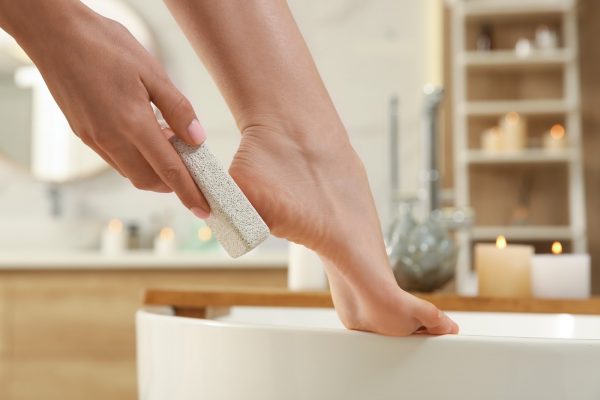
If your home remedies aren’t working, it’s likely due to a biological process called hyperkeratosis. When you use a foot file or pumice stone aggressively at home, your body doesn’t realize you are trying to help. It perceives the filing as more friction and trauma.
In response, the skin’s defense system kicks into high gear, producing even thicker layers of skin to protect itself. This is why many people find their calluses get harder and larger the more they try to “fix” them at home.
Are Your Shoes Really the Culprit?
It’s easy to blame a specific pair of shoes, but the issue is usually a combination of environment + anatomy.
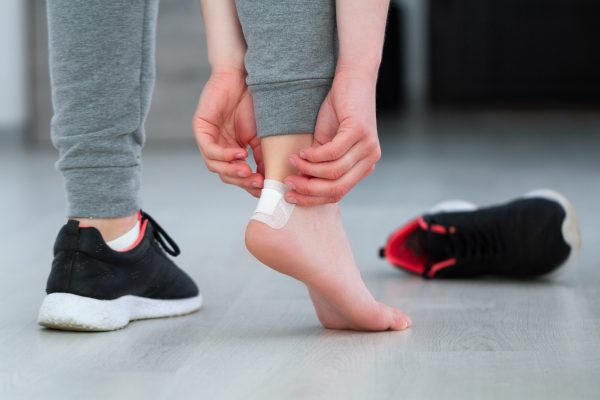
1. Mechanical Friction
If you have a high arch or a slight hammertoe, your toe joint sits higher than average. This creates a “hot spot” where the skin is constantly pinched between the bone and the top of your shoe.
2. Pressure Points & Gait
If you find yourself developing calluses only on the inside of your big toe or just on the outer edge of your heel, the issue is likely your gait (the way you walk). Your foot is rolling in a way that puts 100% of your weight on 10% of your skin.
3. Cumulative Movement
For anyone who is on their feet a lot, the sheer volume of “mechanical friction” from thousands of daily steps on hard surfaces—like tile, hardwood, or concrete—is often more than the skin can naturally handle. Over time, this constant impact necessitates specialized support, such as custom orthotics, to redistribute that pressure.
How to Tell the Difference: The “Squeeze Test”
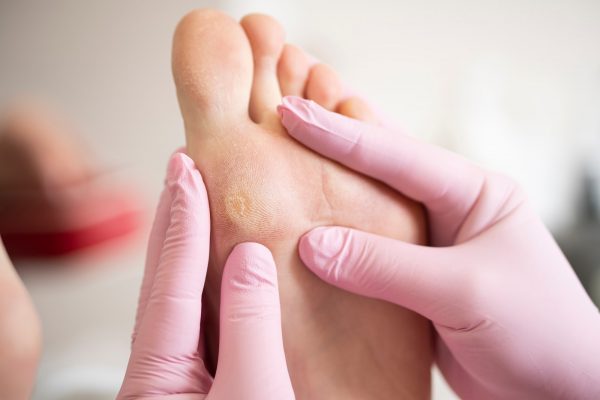
One of the biggest risks of self-diagnosis is confusing a corn with a viral infection. Treating a viral growth like a friction-based corn can cause the issue to spread.
The At-Home Diagnostic Tip:
- Press Down: If it hurts when you press directly on top of the bump, it is likely a corn. This is because you are pushing that “plug” of hard skin into the nerves below.
- Squeeze: If it hurts when you squeeze the sides of the bump, it is likely a plantar wart. Warts contain tiny, vertical blood vessels and nerves; squeezing them from the sides puts pressure on these vessels, causing a sharp, stinging pain.
If you aren’t sure, it is best to check against the three most common foot problems to ensure you aren’t using the wrong treatment.
Moving Toward a Permanent Solution
At this stage, you don’t necessarily need surgery—you need a strategy. Understanding the difference between foot corns and foot calluses is the first step. The next is determining if your pain is skin-deep or structural.
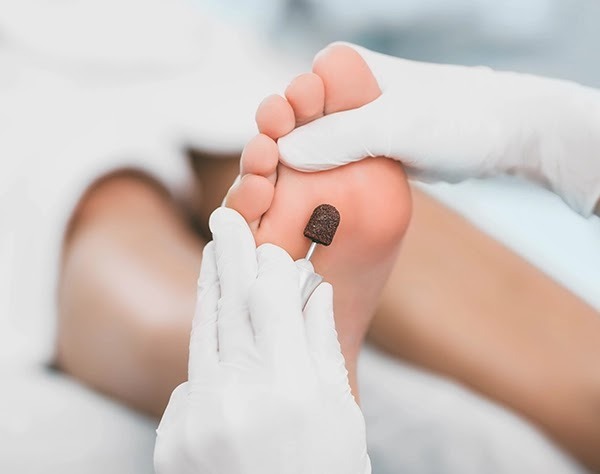
A specialist can provide professional debridement—a sterile, painless process that removes the “core” of the corn—while helping you identify the shoe changes or padding needed to stop the friction for good.You don’t have to keep “toughing it out” or dealing with the mess of home remedies. If you’re ready to stop the cycle of pain and get back to your day without distraction, we’re here to help. Learn more about what to expect during an evaluation or reach out to one of our convenient locations to start a conversation about your foot health.
Categorized in: Blog
Comments are closed