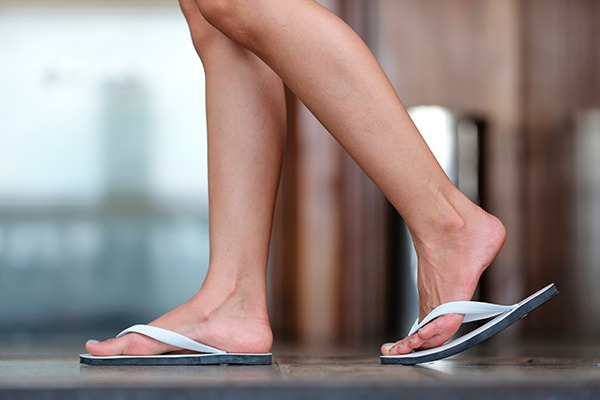
Maybe you noticed it while slipping on your sandals this morning: a toe that sits a little lower than it used to, or one that’s started rubbing against the strap in a spot that never bothered you before. It’s easy to chalk it up to the wrong pair of shoes. But if the same toe keeps causing the same problem no matter what you wear, your footwear may not be the cause — it may just be revealing one.
Hammertoes — a condition where one or more toes bend downward at the middle joint in a way the joint wasn’t designed for — are progressive. They don’t correct themselves, and they don’t stay put. The earlier you seek hammertoe treatment, the more options are on the table and the simpler those options tend to be.
What Is a Hammertoe?
A hammertoe is a condition where one or more toes bend downward at the middle joint, causing a curl that gives the toe a hammer-like shape. Hammertoes most often affect the second, third, or fourth toes, and they’re not always obvious at first. You may also hear the term mallet toe, which describes a similar bend that occurs closer to the tip of the toe rather than the middle joint.
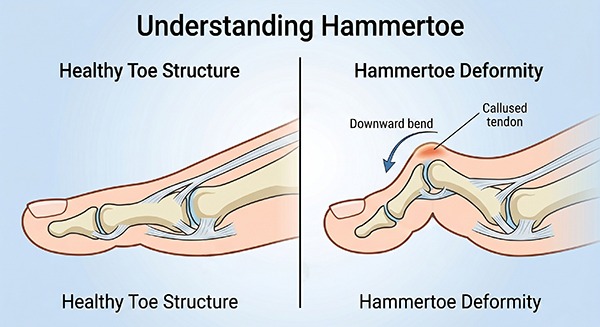
Both are more than just a cosmetic concern. This common foot condition can lead to pain, corns, calluses, and difficulty finding comfortable shoes. Many people first notice it when toe pain starts interrupting daily activities.
For a closer look at related toe conditions, Hammer, Mallet, and Claw Toe Deformities breaks down the differences.
Flexible vs. Rigid: Why It Matters
There are two types of hammertoes.
When there is flexibility in the toe, you have what is unsurprisingly called a “flexible” hammertoe. In this case, the joint can still be straightened manually. These are easier to treat with non-surgical approaches such as orthotics, exercises, and footwear changes.
On the other foot, you may not have those same options when the toe joint becomes fixed and cannot move. Rigid hammertoes often require surgery for lasting correction.
The earlier you address a hammertoe, the more likely you are to avoid surgery.
Hammertoe Symptoms to Watch For
Hammertoes may develop slowly, and symptoms can include:
- Pain or irritation when wearing shoes
- A toe that bends downward at the middle joint
- Corns or calluses forming where the toe rubs against shoes
- Swelling, redness, or burning sensations
- Limited movement of the affected toe
- A sandal strap or shoe seam rubbing consistently against the same spot on a toe, especially if a callus is forming there
If toe pain is interrupting your morning walk or regular routine, it’s a sign to seek professional care. Just “putting up with it” isn’t going to make the pain go away.
What Causes a Hammertoe, and Why Sandals Matter
Several factors can lead to hammertoe development, including:
- Flat sandals with no arch support, or sandals with narrow straps that force toes into unnatural positions. Toe pain from sandals is one of the most common and underrecognized triggers in Southwest Florida, where sandals replace closed-toe shoes for months at a time
- Muscle imbalances that pull the toe into a bent position
- Genetics (inherited foot structure)
- Arthritis or other joint conditions
- Trauma or injury to the toe
Even lifestyle choices, like spending long hours on your feet in unsupportive footwear, can increase your risk. The same is true of any rigid work shoe worn through a long shift, where the sideways pressure on your toes adds up the same way tight casual shoes do.
For more on what drives hammertoe development, see our overview of the causes of hammertoes.
Getting Relief: Hammertoe Treatment Options
Hammertoes are treated differently depending on how far the condition has progressed. A flexible hammertoe — where the joint can still be moved manually — responds well to conservative care. A rigid hammertoe, where the joint has become fixed, may require surgery.
Non-Surgical Treatment for Flexible Hammertoes
Conservative hammertoe care works best when the condition is caught early. These approaches give you the most options:
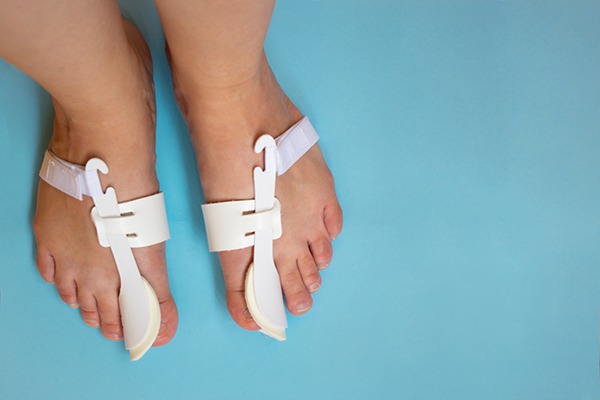
- Custom orthotics or splints can help correct muscle imbalance and realign the toe.
- Shoe modifications, such as choosing shoes with a wide toe box and low heels, can reduce pressure.
- Toe exercises such as picking up marbles with your toes or gently straightening the toe can improve strength and flexibility.
For a detailed look at what conservative care looks like in practice, our guide to non-surgical treatment options covers what to expect.
For practical at-home steps you can start now, 5 Hammertoe Correction Tips is a useful companion.
When Surgery Is Needed
If conservative care fails or the hammertoe is rigid, surgery may be recommended. Surgical procedures are designed to straighten the toe permanently by realigning bones, releasing tight tendons, or fusing small joints.
While surgery is effective, podiatrists generally reserve it for advanced cases, which is another reason why early intervention matters.
Frequently Asked Questions
Can a hammertoe be corrected without surgery? Yes — if the hammertoe is still flexible, meaning the toe joint can be moved manually, conservative care is often effective. Custom orthotics, toe splints, footwear modifications, and targeted exercises can all reduce progression and relieve discomfort. Surgery is generally reserved for rigid hammertoes where the joint has become fixed and no longer responds to non-surgical approaches.
What types of sandals are worst for hammertoes? Flat sandals with no arch support, narrow toe boxes, and straps that cross directly over the toes put the most stress on the toe joints. In Southwest Florida, where sandals are worn daily for much of the year, this kind of repetitive pressure is one of the most common drivers of hammertoe progression. Our guide to supportive sandals covers what to look for.
When should I see a podiatrist for a bent or painful toe? If a toe has started to look visibly bent, rubs consistently against footwear, or has developed a corn or callus at the point of friction, it’s worth getting it evaluated. Hammertoes are progressive — the earlier they’re assessed, the more treatment options are available and the less likely surgery becomes.
Take the First Step This Season
Catching a hammertoe early keeps options open and treatment straightforward. The further it progresses, the narrower that window becomes.
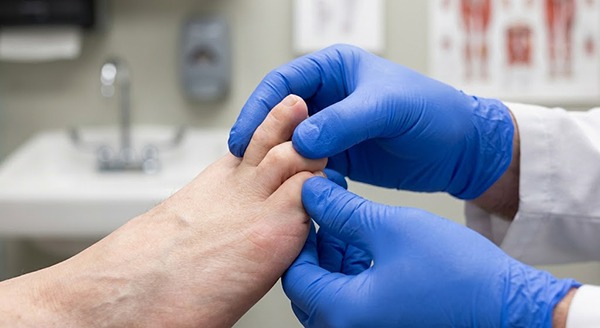
The Foot & Ankle Group offers hammertoe treatment across all three Southwest Florida locations. Your toes work hard every day, and getting ahead of a hammertoe makes all the difference between a simple fix and a longer road to relief. Schedule your appointment at our Fort Myers, Bonita Springs, or Cape Coral office today.
Categorized in: Blog
Comments are closed