If your doctor recently told you to start paying closer attention to your feet, you’re in the right place. That referral wasn’t a formality — it was good advice. Diabetes changes the way your body responds to even minor foot issues, and catching problems early makes an enormous difference in your long-term health and mobility. This guide covers the six daily habits that do the most to protect your feet, plus clear guidance on when it’s time to call a podiatrist.

If you’re spending your winters here in Southwest Florida — sandals, beach walks, warm pavement year-round — your feet are working harder than they would up north. That context matters, and it makes these habits more important, not less.
Why Your Feet Need Extra Attention When You Have Diabetes
Diabetes affects circulation and nerve function in ways that make your feet uniquely vulnerable to injury, infection, and slow healing — even when you feel fine.
Why Does Diabetes Affect Your Feet?
Diabetes affects your feet in two important ways, and understanding both helps everything else in this post make sense.
The first is diabetic neuropathy — damage to the peripheral nerves that can gradually reduce or eliminate feeling in your feet and legs. This happens quietly over time, which means you may not realize how much sensation you’ve lost until something goes wrong.
The second is reduced circulation. Diabetes can narrow and harden the blood vessels that supply your feet, a condition called peripheral artery disease that can cause your feet to feel cold or slow to heal. When blood flow is compromised, even minor wounds carry real infection risk.
Together, these two factors are why daily foot care isn’t optional when you have diabetes. It’s a genuine health priority.
1. Inspect Your Feet Every Day
Daily inspection is the single most important habit you can build — the safety net that compensates for any reduction in sensation. Each day, check for:
- Cuts or scratches
- Blisters or sores
- Redness or swelling
- Any change in skin color or temperature

If bending down is difficult, use a handheld mirror to check the soles, or ask a family member to look.
If you spot anything that resembles an open sore or wound, don’t wait. Diabetic foot ulcers can develop and worsen quickly, and early attention is always the right call.
2. Test the Water Temperature Before You Step In
This matters more than it sounds. Neuropathy disrupts the feedback loop that healthy people rely on unconsciously — the one that signals bathwater is too hot before you step in. Hot water burns can occur without the usual pain warning, and by the time you feel discomfort, damage may already be done.
Test water with your hand or elbow first, and aim for warm rather than hot. It’s a small adjustment with a real protective effect, especially for people whose sensation loss has been gradual and may be greater than they realize.
3. Always Wear the Right Shoes
Your shoe choice matters more when you have diabetes than it does for most people. A shoe that pinches, rubs, or creates pressure in the wrong place can cause a sore before you ever feel discomfort. Proper fit — enough room in the toe box, no tight spots, no seams pressing against the skin — is one of the most effective preventive measures available.

Avoid walking barefoot, even at home. A small object on the floor or a minor stub can go completely unnoticed when sensation is reduced. For people managing diabetes, diabetic shoes and custom orthotics are worth discussing with your podiatrist. They’re designed to distribute weight evenly and reduce pressure points over the long term.
4. Keep Your Skin Clean, Dry, and Moisturized
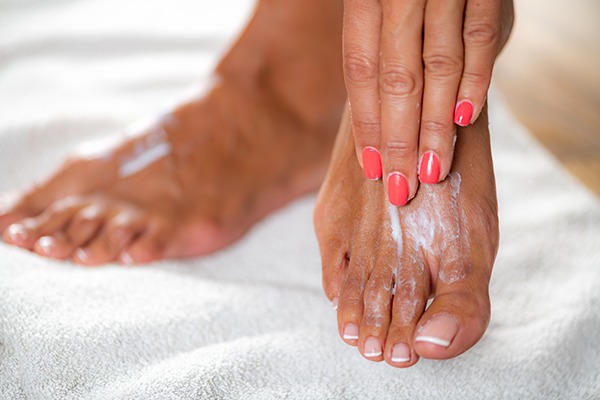
Here’s the rule that surprises most people: moisturize your feet every night, but never between the toes. On the tops and bottoms of your feet, a gentle lotion prevents the dry, cracked skin that creates entry points for infection. Between the toes, moisture trapped in that warm space does the opposite — it promotes the bacterial and fungal growth you’re trying to avoid.
After bathing, dry your feet thoroughly before applying anything, paying extra attention to the spaces between the toes.
5. Be Careful With Nail Care and Pedicures
When trimming at home, cut nails straight across rather than curved at the corners. Curved cuts encourage the nail to grow into the surrounding skin, and an ingrown toenail that becomes infected is a much more serious problem when circulation is compromised. If you have difficulty reaching your feet or your nails are thick, trimming your toenails safely is something your podiatrist can handle at a routine visit.
Salon pedicures carry real risk. Shared tubs, water jets, and reused tools are potential sources of infection. If you go, bring your own tools and skip the water jets.
6. Keep Moving — Your Circulation Depends on It
Low-impact movement supports blood flow to the feet and lower legs, which helps offset some of the circulation challenges diabetes introduces. A 20-minute walk, a swim, or a bike ride all count — consistency matters more than intensity. Always wear appropriate, well-fitted footwear when you’re active. For more on building protective daily habits, 5 secrets to preventing diabetic foot problems is worth a read.
When to See a Podiatrist — Don’t Wait
Daily self-care works best as a complement to professional care, not a replacement for it. If you notice any wound, sore, or skin change that doesn’t begin to improve within 24 hours, call your podiatrist. What resolves on its own for someone without diabetes may not follow the same timeline for you.
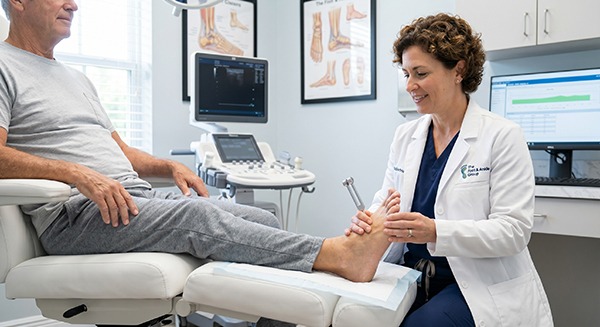
Annual diabetic foot exams — or more frequent visits if your podiatrist recommends them — are standard of care. A trained eye catches what daily self-inspection misses, and having an established relationship with a podiatrist means you have somewhere to call the moment something looks off. We are your partners in this, because regular checks mean peace of mind.
Managing diabetes is a daily commitment, and your feet deserve the same consistent attention. The team at The Foot & Ankle Group is here to be your partner in that. Explore our diabetic foot care services and schedule your appointment at our Fort Myers, Bonita Springs, or Cape Coral office today.
Ready to get started? Here’s what to expect at your first visit.
Categorized in: Blog