You’ve soaked it. You’ve given it time. It’s not getting better.

If your ingrown toenail won’t heal after several days of home care, that’s a signal — not a patience problem. An ingrown toenail that does not respond to soaking, ointment, and rest within 3–4 days typically needs professional treatment to resolve. This post explains the timeline, what to expect at the office, and exactly when to stop waiting.

Tight footwear and nail-cutting habits are among the most common contributing factors — what causes ingrown toenails breaks that down in detail.
How Long Is Too Long to Wait on an Ingrown Toenail?
Home care is appropriate for mild irritation, but the window is shorter than most people expect. Use this as your guide:
- Mild irritation, no infection signs: 2–3 days of soaking, antibiotic ointment, and comfortable footwear is reasonable.
- No improvement after 3–4 days: Time to call. Waiting longer does not help. It increases the risk that the nail edge digs deeper into the soft tissue.
- Any sign of infection (warmth, spreading redness, discharge): Do not wait. Call the same day. For a full list of what to watch for, signs your ingrown toenail is infected has the complete breakdown.
- Recurring ingrown on the same toe: Home care is not the right path regardless of timeline. A structural fix is needed. A quick clip isn’t enough when the nail keeps growing back at the wrong angle.
If your shift schedule makes “monitor it for a few more days” genuinely hard to follow, call sooner. An earlier appointment means a simpler fix.
Why 12-Hour Shifts Make an Ingrown Toenail Worse
Tight nursing clogs and compression socks create sustained lateral pressure on the nail edge throughout a shift, a different mechanical load than a casual shoe worn for a few hours. Someone who can’t rest the foot between morning and end of shift won’t get the same result from home care as someone who can. Most in-office procedures take under an hour, and most people walk out the same day.
What Will a Podiatrist Do for an Ingrown Toenail?
Your podiatrist will assess the nail, check for infection, and recommend one of two approaches depending on severity.
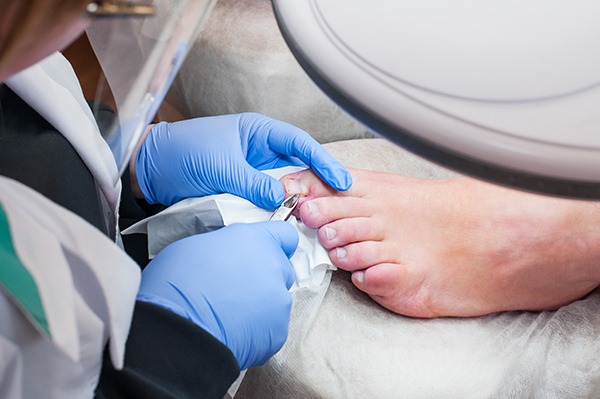
Lifting the Nail
Lifting the nail means the corners of the nail are pulled away from the inflamed tissue. The toenail is not removed. Instead, it rests on top of the skin in the correct position to promote proper growth, sometimes with the help of a splint or sterile cotton to keep the nail straight.
Matrixectomy
A matrixectomy involves numbing the area, removing the ingrown nail edge, and when needed, applying phenol. Phenol is a medical solution used to prevent the nail from regrowing at an improper angle. The toe is then bandaged and left to heal. A follow-up visit is typically scheduled to confirm proper healing.
The procedure is performed in-office and takes under 30 minutes. Local anesthetic is used, so you drive yourself. Most people return to normal footwear within a day or two. If you have a shift that evening, the office can advise on post-procedure footwear before you leave.
For everything that comes after, 6 ways to keep an ingrown nail from growing back is the right next read.
Visiting Us for the Season?
Treatment is a single visit. We document everything so your doctor up north stays in the loop. If you’re not sure what coming in looks like, what to expect during a visit walks you through it.
Frequently Asked Questions

How long should I try home treatment before seeing a podiatrist for an ingrown toenail? 2–3 days is reasonable for mild irritation with no infection signs. If there is no improvement after 3–4 days, or if you see warmth, spreading redness, or discharge at any point, call the same day.
Can an ingrown toenail heal on its own? A mild ingrown toenail with no infection may improve with soaking and proper footwear. One that is infected, recurring, or not responding to home care within 3–4 days will not resolve without professional treatment.
What does a podiatrist do to fix an ingrown toenail? Depending on severity, your podiatrist will either lift the nail edge to reposition it over the skin, or perform a matrixectomy. A matrixectomy is an in-office procedure that removes the ingrown portion of the nail and applies a solution to prevent it from regrowing at the wrong angle. Both procedures use local anesthetic and take under 30 minutes.
How long is recovery after ingrown toenail treatment? Most people return to normal footwear within a day or two. The procedure is in-office; local anesthetic is used, so you drive yourself home the same day.
Is ingrown toenail treatment covered by insurance? Coverage varies by plan. Contact our office and we can help verify your benefits before your appointment.
Schedule an Appointment
You’ve given it time. You’ve tried the remedies. If your ingrown toenail still isn’t healing, it’s telling you something — and The Foot & Ankle Group is ready to listen. Schedule your appointment at our Fort Myers, Bonita Springs, or Cape Coral office today. Same-day appointments are often available — call us and we’ll get you in.
Book your ingrown nail appointment or call your nearest location:
- Fort Myers: (239) 936-5400
- Bonita Springs: (239) 992-8690
- Cape Coral: (239) 574-1014
Categorized in: Blog
Comments are closed